
SIGNATURE TALKS
Certainty may be the starting point,
but competence is our destination.
Every session is built from a vantage point that combines lived experience with clinical, correctional, and forensic work.
01
"Shame in the Room"
This session examines the bias that clinicians often unintentionally bring into sessions around topics such as relationships, sexuality, diagnoses, and substance use. It explores what clinicians tend to avoid, and the impact of what they project. Learn how to assess yourself for bias, and to what to do to remain cognizant of the amount of space that bias takes up in the therapy room.
02
“What Survivors Need”
A direct, evidence-informed examination of the gap between what trauma-informed care promises and what survivors actually experience in the room. Trauma-informed care is a buzz word, but what does this mean in practice? Perspective is provided as a survivor of interpersonal violence, a clinician seeking to prevent it, and an academic studying it.
03
“The Need to Feel Different”
This explores addiction, not as moral failure, but a result of human drive's drive to feel different. This talk seeks to reframe how clinicians, law enforcement, and courts approach substance use.
04
“Better Questions, Better Outcomes”
Risk assessment is both a delicate art, and a life-saving measure. This training educates clinicians and those that supervise them on risk assessment- with particular focus on assessing violence, interventions and how to document.
05
"The Psychology of Violence"
Protecting public safety is a universally-shared interest. Across mental health and law enforcement agencies, spanning various disciplines is a duty to protect public safety. This training is built from what research says about violence, and what it looks like up close- professionally and personally. It explores what violence is, how to assess for warning signs, and how to document decisions.
TRAINING TOPICS
What Koreena
Trains On.
Every topic below is one Koreena has lived, studied, or supervised — often all three. Available as standalone trainings, presentations or multi-session intensives.
◈
Moral Relativism
Most staff problems are not hiring problems but development problems. Drawing from research, this training content gives leaders practical tools for identifying external locus of control patterns in their teams and recognizing how organizational culture reinforces or corrects those patterns, and using targeted developmental strategies to move staff toward accountability, self-direction, and sustainable performance. The goal is staff who do not need to be managed into doing good work, who are intrinsically motivated and can accept feedback without crumbling.
◈
Addiction & Substance Use
The neuroscience, the behavior, and the lived reality of substance use disorders — for providers who need to understand it from the inside out, not just the DSM down.
◈
Risk Assessment: Suicide & Homicide
Evidence-based frameworks for structured risk assessment — how to ask, what to document, when to act, and how to defend your clinical reasoning if it ever lands in court.
◈
Domestic Violence & IPV
Coercion, power, and the cycle of violence — including strangulation as a homicide predictor, barriers to leaving, and what providers most commonly miss in screening.
◈
Mental Health in Corrections
Clinical practice inside jails and prisons — navigating dual roles, working with justice-involved clients, and addressing the gap between treatment need and available care.
◈
Assessments
How assessments are used in clinical and forensic contexts, what assessments and why they matter.
◈
Ethics for Clinicians
Real ethical dilemmas in behavioral health — dual relationships, confidentiality limits, documentation risk, and the decisions nobody taught you how to make in grad school.
◈
Clinical Supervision
Supervision as a clinical skill — building reflective practice, managing parallel process, navigating the power differential, and supervising clinicians working in high-trauma environments.
ABOUT KOREENA
Unlikely.
Undeniable.
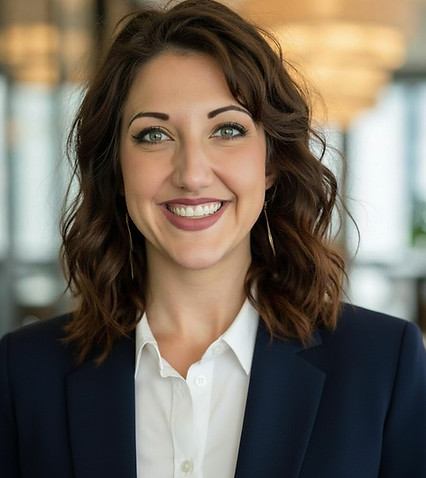
As a teen, she stood before Congress representing Oklahoma's youth. She then dropped out of high school, got wrapped up in drugs and delinquency, went way off path and lived through multiple instances of intense violence. She got her GED and went to college, eventually getting her Masters. She got licensed (doubly) and is now an LPC supervisor and LADC/MH supervisor. She's back in school working on her PhD: Forensic Science and is a juris doctor student at the University of Tulsa College of law. Nobody was running bets on her to be here today, but they should have been. Now she trains professionals because she knows what it is like to need the help, to give it and to supervise it.
"I know these topics from more than research. I lived them. I overcame them. Then I built a career out of making sure others understood them too."
— Master of Science in Counseling, Addictions Focus
— Licensed Professional Counselor, Supervisor (LPC-S)
— Licensed Alcohol & Drug Counselor / Mental Health Supervisor (LADC/MH-S)
— Member, Association of Threat Assessment Professionals (ATAP)
— Doctoral Student, Forensic Science at Oklahoma State University
— Juris Doctor Candidate, University of Tulsa, College of Law (2029)